ChatGPT Plus vs Claude Pro for Everyday Work: Which $20 Plan Wins?
Last updated: October 2026. Plan details checked against the official ChatGPT and Claude pricing pages.
ChatGPT Plus vs Claude Pro is the most common AI question I get from clients. Both plans cost about the same, so the choice comes down to how you work.
This guide skips the benchmark charts. It looks at the jobs you do every day: emails, reports, research, spreadsheets and slides.
Disclosure: SoftwareStackPro may earn a commission if you sign up through some links on this page. It never changes our verdicts.
Picking the wrong email tool can cost an affiliate marketer their whole list. Several popular platforms ban affiliate marketing in their terms, and they can suspend your account without much warning.
This guide shows which email marketing tools for affiliate marketers actually allow affiliate links. We read each platform’s own policy pages, so you know the real rules before you build.
Quick answer
- Fully allowed: GetResponse and AWeber.
- Allowed with rules: Kit, ActiveCampaign and Brevo.
- Not allowed: Mailchimp and MailerLite.
Why Email Matters So Much for Affiliate Marketers
Search traffic is great, but you do not own it. One Google update can cut your clicks overnight, while an email list stays yours.
$36
Average return for every $1 spent on email marketing, according to Litmus.
66.4%
More earnings reported by affiliates who use email compared with those who skip it, per LeadDyno’s 2026 roundup.
$13.81B
Forecast US affiliate marketing spend for 2026, based on EMARKETER data.
69%
Share of affiliates who rely mainly on organic search, per GrowSurf.
That last number is the risk. Most affiliates lean on one traffic source, and email is the safety net that protects your income.
Want more numbers? Our email marketing benchmarks for 2026 cover open rates, click rates and more.
Affiliate Link Policies at a Glance
Here is the short version of each platform’s rules. Read the tool sections below for the fine print.
| Tool | Affiliate links? | Main rule | Best for |
|---|---|---|---|
| GetResponse | Allowed | Has a dedicated affiliate marketing solution | Funnels and full-time affiliates |
| AWeber | Allowed | No affiliate ban, strict on consent and spam | Simple autoresponders |
| Kit | With rules | About 70 to 80% of emails must be your own content | Bloggers and creators |
| ActiveCampaign | With rules | Links allowed, but not the main focus of an email | Advanced automation |
| Brevo | Check first | No clear ban found, but consent rules are strict | Tight budgets |
| Mailchimp | Not allowed | Affiliate marketing listed as prohibited content | Avoid for affiliate lists |
| MailerLite | Not allowed | Affiliate marketing listed as prohibited content | Avoid for affiliate lists |
Tools That Fully Allow Affiliate Marketing
1. GetResponse: Best for Serious Affiliate Funnels
Allowed
GetResponse is the most openly affiliate-friendly tool on this list. It even runs a dedicated affiliate marketing page that talks about using affiliate links and promo codes in automations.
You get landing pages, webinars and a visual automation builder in one place. That makes it easy to run a full funnel from opt-in to promotion.
Verdict: The safest pick if affiliate income is your main business.Visit GetResponse
2. AWeber: Best for Simple, Reliable Autoresponders
Allowed
AWeber has served small businesses since 1998 and has long been a home for affiliate marketers. Its terms focus on banning spam and bought lists, not affiliate links sent to a real opt-in list.
It also connects well with affiliate tracking tools. Expect double opt-in by default on new accounts, which keeps your list clean.
Verdict: A steady, beginner-friendly choice for affiliate newsletters.Visit AWeber
Tools That Allow Affiliate Links With Rules
3. Kit (formerly ConvertKit): Best for Bloggers Who Mix Content and Links
Allowed with rules
Kit allows affiliate links when they sit inside your own content. Its help article on affiliate marketing says roughly 70 to 80% of your emails should be about your own work, with affiliate content making up the rest.
Some topics are off limits whatever your business. Kit bans affiliate links for education offers, loans, online pharmacies and get-rich-quick software.
Verdict: Great for content sites like ours. Not for pure affiliate blasts.
Read our full Kit review for features and pricing.
4. ActiveCampaign: Best for Advanced Automation
Allowed with rules
ActiveCampaign allows affiliate links in marketing emails, with limits. Its affiliate marketing policy says links should not be the main focus of an email.
It also bans using the platform only to push affiliate offers. You also cannot send messages about affiliate marketing itself, such as “earn money as an affiliate” pitches.
Verdict: Powerful, but only if your emails lead with real value.
See how it performs in our ActiveCampaign review.
5. Brevo: Best Budget Option (Confirm First)
Check with support
We did not find a clear affiliate marketing ban in Brevo’s public policies. However, its acceptable use policy is strict on consent and bans scraped or bought lists.
Because the rules are less spelled out, ask Brevo support before you build an affiliate-heavy list. Get the answer in writing.
Verdict: Good value, but confirm your use case first.
Our Brevo review covers its free plan and send limits.
Tools That Do Not Allow Affiliate Marketing
Warning: Both tools below can suspend accounts that break these rules. Do not build an affiliate list on them.
6. Mailchimp
Not allowed
Mailchimp lists affiliate marketing as prohibited content in its acceptable use policy. It also says it uses automated and human reviews to catch violations.
If you already run an affiliate list there, plan a move now. Our Mailchimp alternatives guide can help you choose.
For a full breakdown of the tool itself, see our Mailchimp review.
7. MailerLite
Not allowed
MailerLite names affiliate marketing and MLM in its list of content it does not allow. That rule covers affiliate promotions sent through your newsletters.
MailerLite is still a great tool for bloggers who sell their own products. Read our MailerLite review to see if it fits that use.
How to Choose the Right Tool
Start with how much of your income comes from affiliate links. That one answer narrows the list fast.
- Mostly affiliate income? Pick GetResponse or AWeber.
- A blog or brand with some affiliate links? Kit or ActiveCampaign will work.
- Tiny budget? Try Brevo, but confirm your use case with support first.
- Selling your own products only? MailerLite and Mailchimp are fine.
Still comparing features? Our best email marketing software guide and free plan comparison go deeper.
5 Rules to Keep Your Affiliate Emails Safe
Even affiliate-friendly tools will close accounts that spam. Follow these rules on any platform.
- Only email people who opted in. Never buy or scrape lists.
- Lead with value. Teach first, then recommend.
- Disclose your links. The FTC endorsement guides require clear disclosure.
- Avoid risky niches. Loans, pharmacies and get-rich-quick offers get flagged fast.
- Re-read the policy yearly. Terms change, and old rules may not apply.
New to list building? Start with our guide on how to build an email list. Then set up the email automation workflows that turn subscribers into buyers.
Final Verdict
GetResponse is our top pick for full-time affiliate marketers. AWeber is the simpler, budget-friendly runner-up.
If you run a content site with some affiliate links, Kit is a strong fit. Just keep your own content front and center.
Frequently Asked Questions
Can I use affiliate links in Mailchimp?
Mailchimp lists affiliate marketing as prohibited content in its acceptable use policy. Building an affiliate business on Mailchimp puts your account at risk.
Does Kit allow affiliate links?
Yes, with conditions. Most of your email content must be about your own business, and some niches like loans and online pharmacies are banned.
What is the best free email tool for affiliate marketers?
Kit and AWeber both offer free plans and allow affiliate links under their rules. Check current limits on each site, since free plans change often.
Do I need to disclose affiliate links in emails?
Yes. In the US, the FTC expects a clear disclosure whenever you earn money from a recommendation.
Can MailerLite be used for affiliate marketing?
No. MailerLite lists affiliate marketing as content it does not allow in newsletters.
Policies checked October 2026. Platforms update their terms, so always confirm on the official policy page before you build your list.
Quick answer: Pick ChatGPT Plus if you want one tool for everything, including images. Pick Claude Pro if most of your day is writing, long documents and Microsoft 365 files.
ChatGPT Plus vs Claude Pro at a Glance
Sources: the official ChatGPT pricing page and Claude pricing page. Features change often, so check both before you pay.
Why This Choice Matters: The Numbers
AI chat is now a normal work tool. ChatGPT alone reported around 900 million weekly users in early 2026.
The work use is very ordinary. OpenAI’s largest usage study found that writing made up about 40% of work related messages.
The same study found that about two thirds of those writing requests were edits. People mostly ask AI to fix text they already wrote.
The time savings are real too. A study published in Science found that professionals using ChatGPT finished writing tasks 40% faster, with quality up 18%.
Claude’s audience leans more technical. Anthropic’s Economic Index reported coding as its largest use at 36% of sampled conversations in 2025.
So the real question is simple. Which plan handles your writing, editing and research with less friction?
Pricing: Same Monthly Cost, One Small Difference
Both plans cost $20 per month. Neither price includes local tax.
Claude Pro has an annual option at $200 up front. That works out to about $17 per month and saves you $40 a year.
ChatGPT Plus is billed monthly only. That suits you if you want to cancel any time without a year locked in.
ChatGPT also has a cheaper Go plan below Plus. It has fewer features and may show ads, so it is not a like for like match with Claude Pro.
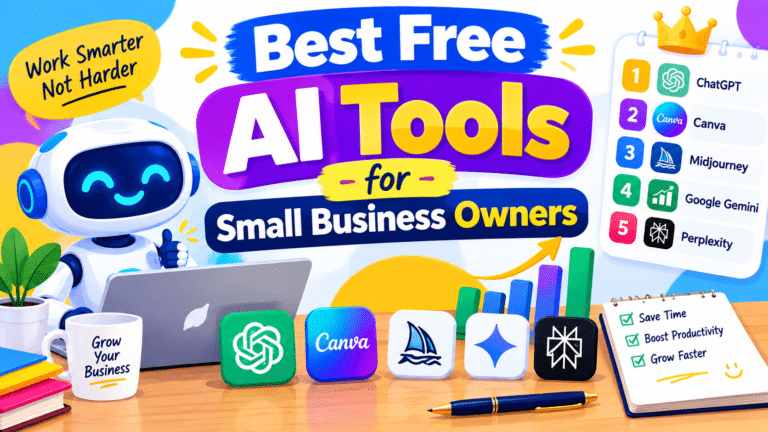
Not ready to pay yet? Start with my guide to the best free AI tools for small business owners.
Usage Limits: The Part Most Reviews Skip
Limits decide how a plan feels at 3pm on a busy day. The two plans handle them very differently.
ChatGPT Plus limits
Plus gives you unlimited everyday text chats, subject to fair use rules. Caps apply to the deeper Thinking levels, uploads, images and research.
When you reach a Thinking limit, ChatGPT may carry on with another available model. You keep working, but answers can get shallower.
Plus includes the Medium and High thinking levels. Extra High and the Pro model need a higher plan, according to OpenAI’s help center.
Claude Pro limits
Claude Pro has no fixed message count. You get a usage pool that resets on a rolling 5 hour window, plus a weekly limit.
Anthropic says Pro gives at least 5x the usage of the free plan per session. Long chats, big files and stronger models use the pool faster.
When you hit the limit, Claude stops until it resets. You can also buy usage credits to keep going, as explained in Claude’s usage limit guide.
In plain terms: ChatGPT Plus tends to slow you down. Claude Pro tends to stop you. If you send many short messages all day, that difference matters.
Writing and Editing
Writing is the top work task for AI, so this section carries the most weight. Both tools draft emails, proposals and reports well.
Many reviewers and long term users say Claude’s long form writing sounds more natural. It also tends to follow style rules closely across a long document.
ChatGPT is strong at quick turnarounds and variety. It handles short emails, social posts, subject lines and rewrites in many tones with little setup.
Both plans let you save your preferences. ChatGPT uses memory and custom GPTs, and Claude uses memory, Projects and Skills.
If email is your main job, see my roundup of AI tools that actually improve email marketing results.
Research and Long Documents
Both plans include a deep research feature. Each one searches the web, reads many sources and returns a cited report.
The gap shows up with long files. ChatGPT Plus lists a 256K reasoning window, which OpenAI describes as roughly 320 pages of input.
Claude lists a context window of up to 1M, depending on the model. That gives it more room for contracts, tender documents and long reports in one chat.
Always check the sources either tool gives you. AI research still makes mistakes, especially with numbers and dates.
Spreadsheets, Slides and Office Files
This is where both tools changed most in 2026. Each one now builds real files, not just text.
ChatGPT Plus includes ChatGPT Work on desktop, web and mobile. It also has extensions for Excel, Word, PowerPoint and Google Sheets.
Claude Pro includes Claude Docs, Slides and Design. It also plugs into Microsoft 365, Outlook and Chrome.
If your office runs on Google Sheets, ChatGPT has the clearer fit. If you live in Outlook and Word, Claude’s Microsoft tools are worth a close look.
Images and Voice
ChatGPT Plus wins this round clearly. It has built in image creation, including a Thinking mode for more accurate results.
Claude’s pricing page lists no image generator. Claude Design covers layouts and visuals, but it is not the same as creating a photo style image from a prompt.
Both plans include voice mode. ChatGPT adds voice with video, which helps when you want to show it something on camera.
Privacy and Data
Both plans can use your chats to train future models. Both let you opt out in settings.
Turn that setting off before you paste client data. For stronger controls, both companies sell team plans with training off by default.
Which One Should You Pick?
| If your everyday work is… | Better fit | Why |
|---|---|---|
| A bit of everything | ChatGPT Plus | Widest feature set in one plan |
| Social posts, ads and visuals | ChatGPT Plus | Built in image creation |
| Long reports and proposals | Claude Pro | Larger context window and steady long form writing |
| Reviewing long contracts or tenders | Claude Pro | Up to 1M context on some models |
| Outlook, Word and PowerPoint all day | Claude Pro | Microsoft 365 and Outlook tools included |
| Google Sheets and quick data checks | ChatGPT Plus | Google Sheets extension and data analysis |
| Many short questions all day | ChatGPT Plus | Unlimited everyday text chats |
| Lowest yearly cost | Claude Pro | $200 a year on annual billing |
A 10 Minute Test Before You Pay
Both tools have free plans. Use them to run the same three tasks side by side.
- Paste a messy email you wrote and ask for a clearer version.
- Upload a long PDF you know well and ask five specific questions.
- Ask for a one page plan for a real project on your desk.
Pay for the one whose answers you edit least. That is the one that will save you the most time.
For more ways to cut busywork, read AI tools that actually save time. Bloggers should also see my picks for the best AI SEO tools for keyword research on a budget.
Frequently Asked Questions
Is ChatGPT Plus or Claude Pro better for everyday work?
ChatGPT Plus is the better all rounder because it covers chat, images, research and files in one plan. Claude Pro is better if your work is mostly long writing and document review.
Do ChatGPT Plus and Claude Pro cost the same?
Yes, both cost $20 per month. Claude Pro also offers annual billing at $200, which works out to about $17 per month.
Which plan has stricter limits?
Claude Pro usually feels stricter because it stops when your session or weekly limit runs out. ChatGPT Plus keeps everyday chats going and limits the deeper thinking levels instead.
Can Claude Pro create images?
Claude’s pricing page does not list an image generator. If you need images often, ChatGPT Plus is the safer choice.
Is it worth paying for both?
Only if AI is central to your job. Most people should pick one, use it for a month, then review.
Final Verdict
For most people doing general office work, ChatGPT Plus is the easier first subscription. It does more things and rarely stops you mid task.
Claude Pro earns its place if you write and read long documents for a living. The annual price also makes it the cheaper plan over a year.
Still deciding what belongs in your toolkit? Browse all my AI software reviews or see the full recommended stack.
Related Reading:
Best Free AI Tools for Small Business Owners (2026)
AI Tools That Actually Improve Email Marketing Results
7 Best AI SEO Tools for Keyword Research on a Budget in 2026